25 Years Ago, Apple Put 1,000 Songs Into a Deck-of-Cards-Sized Player for $399
The launch of the original iPod marked a pivotal shift in consumer electronics, establishing a new standard for portable music storage and user experience.
By Tariq Mahmoud ·
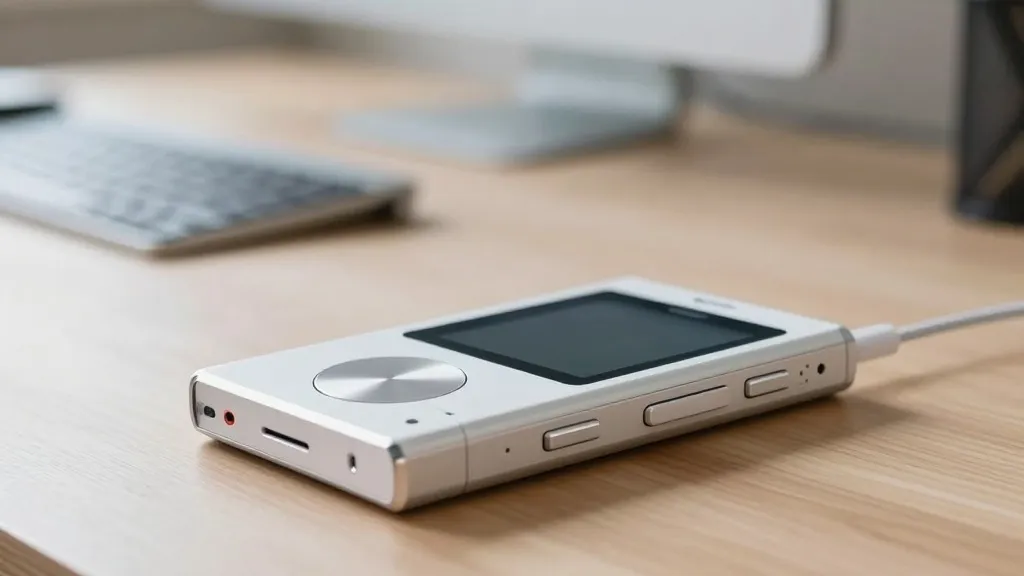
Exactly twenty-five years ago today, Apple CEO Steve Jobs unveiled a device that would redefine how consumers interacted with digital music. The original iPod was introduced not just as a gadget, but as the missing link in a broader digital lifestyle strategy. At a price point of $399, the device promised to hold an entire music library in a package small enough to fit in a pocket, a claim that captured the imagination of the tech world and set the stage for the next decade of mobile computing.
The launch occurred at a critical juncture for Apple. By October 2001, the company had successfully navigated the post-dot-com bubble era, having revitalized its brand with the release of Mac OS X, iBooks, and iMacs. Jobs envisioned the Mac as the central hub for a user’s digital life, connecting cameras, camcorders, and DVD players. He identified portable music as the ideal entry point for this ecosystem, noting that while competitors like Sony, Creative, and Sonic Blue offered players, none had yet perfected the user experience. Apple chose to enter the market with a hard-disk-based jukebox rather than flash memory or CD-based systems, believing this offered the best balance of capacity and cost.
The hardware specifications were designed to maximize portability without sacrificing capacity. Utilizing Toshiba’s 1.8-inch ultra-thin hard drive, Apple managed to fit 5GB of storage into a chassis measuring 2.4 by 4 by 0.78 inches. Weighing just 6.5 ounces, the device was lighter than most contemporary cell phones. This compact form factor allowed the iPod to hold 1,000 typical pop songs encoded at 160Kbps, a volume Jobs described as sufficient for most people’s entire libraries. The device supported standard MP3, WAV, and AIFF formats, delivering CD-quality audio.
Performance and connectivity were central to the product’s appeal. The iPod featured a FireWire 400 connection, which was significantly faster than the USB standards prevalent at the time. Jobs highlighted that transferring a full CD of music took only five to ten seconds via FireWire, compared to roughly five minutes over USB. Filling the device with 1,000 songs required about ten minutes, a stark contrast to the five-hour wait times associated with USB-based players. The device also included a rechargeable lithium-polymer battery capable of providing ten hours of continuous playback, with an 80% charge achievable in one hour.
The user interface was designed for single-hand operation, featuring a scroll wheel with tactile feedback via a piezoelectric clicker. This allowed for rapid navigation through playlists, artists, and individual tracks. On stage, the device was demonstrated playing 'Building a Mystery' by Sarah MacLachlan. The launch was accompanied by the release of iTunes 2, which introduced features like MP3 CD burning and, crucially, Auto-Sync. This feature ensured that music libraries curated on a Mac would automatically update on the iPod whenever it was connected for charging or data transfer, effectively turning the player into an extension of the desktop computer.
The iPod’s dominance lasted for over a decade, existing alongside the iPhone, which arrived in early 2007. While smartphones eventually subsumed the functionality of dedicated music players, the iPod line continued until the release of the 7th-generation iPod Touch in May 2019. Although the product was left unmaintained for several years, Apple officially discontinued the line in May 2022, closing a chapter in tech history that began with a simple promise: your entire music library, in your pocket.
Source: Tom's Hardware