One-Hour Deadline: 250 Hebron Families Evicted After Checkpoint Shootout
Deputy Mayor says soldiers gave residents less than 60 minutes to leave four neighborhoods after two soldiers were killed in a Friday attack.
By Katherine Barnes ·
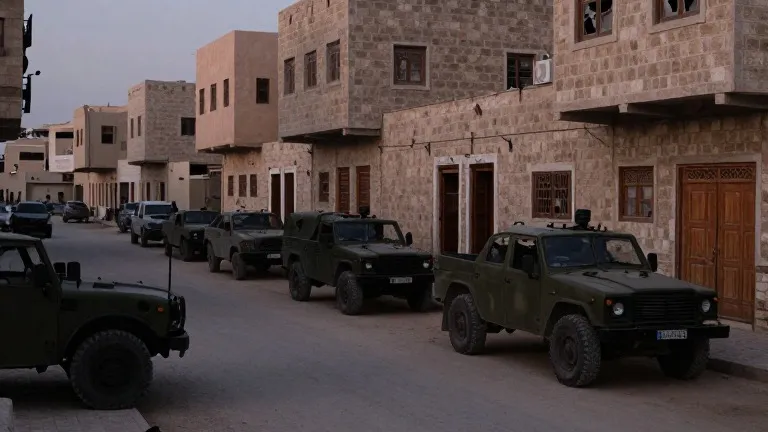
Israeli military forces gave residents of four Hebron neighborhoods one hour to vacate their homes, a deadline that forced approximately 250 families from their residences over the weekend. The mass eviction followed a deadly shooting on Friday near the Farsh al-Hawa checkpoint, where two soldiers were killed and three others wounded.
The displacement covers the al-Jalada, Ein Deir Bahha, Wadi al-Maghariba, and Shi'b al-Milh areas. Khaled al-Qawasmi, deputy mayor of Hebron, stated that the military operation began around midnight. He confirmed that the figure of 250 displaced families is not final, as the military siege remains in effect and further evacuations are possible.
Residents described the eviction process as abrupt and forceful. Abdul Hamid Shahada, a local resident, said soldiers stormed the area shortly after the initial attack on Friday morning. He recalled watching troops beat a man while compelling families to leave. Shahada said his family packed small bags containing medicines, phone chargers, and documents after sleeping poorly throughout the night.
Soldiers directed the displaced families along a specific route toward Al-Salam Street. From there, some residents moved in with relatives, while others sought shelter at the Child Happiness Centre. This facility, along with family guesthouses and the Korean Centre, was opened by the Hebron Municipality to accommodate those who lost access to their homes.
The military told some families they would be kept out of their homes for six months to a year. Shahada and other residents reported that soldiers gave no clear timeline for their own return, using only the phrase 'until further notice.' They expressed concern about the condition of their properties, noting that neighbors' homes were found with doors and windows open and signs of ransacking.
The eviction coincided with demolition work in Farsh al-Hawa. Local sources reported that approximately seven dunums of land were leveled, affecting residential buildings, commercial shops, and industrial facilities. The area includes the homes of Ahmad and Hamouda al-Joba, the two suspected attackers who were killed by Israeli fire after the checkpoint shooting.
Israeli forces imposed a broad closure on Hebron and surrounding villages, towns, and refugee camps. Main entrances and roads were blocked, and troops raided homes to conduct searches and arrest suspects. Local sources indicated that at least 13 Palestinians were arrested, while dozens more were detained for hours for field interrogations.
In response to the situation, the Hebron Municipality activated an emergency plan. This includes preparing additional shelters and establishing an operations centre to monitor residents' needs. Qawasmi warned that if the military operation expands, the city faces a crisis in finding sufficient shelter due to limited capacity.
The Israeli military described its actions as an operation to thwart terrorism, conducted in coordination with the Shin Bet and Border Police. The army stated it was searching for and dismantling terrorist infrastructure and weapons. It confirmed that the two suspected attackers were killed and that dozens of suspects were being interrogated.
Source: Middle East Eye