Tennessee Execution: Court Filing Details IV Failures in Pike Case
New legal documents reveal that medical staff struggled to access Christa Pike's veins, with one member stating a vessel had 'blown' before the lethal drug was administered.
By Katherine Barnes ·
Tennessee’s lethal injection protocol lacks specific procedures for handling cases where an inmate survives two doses of pentobarbital, a gap exposed by the recent near-fatal execution of Christa Pike. New court filings provide the most granular account yet of the medical difficulties encountered during her Sept. 30 execution attempt.
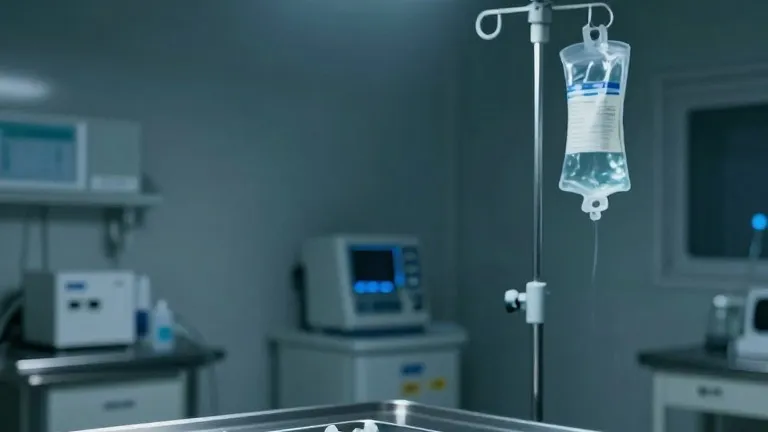
Defense attorney Randy Spivey submitted the document on Thursday, detailing how the IV team used approximately 10 needles to establish lines in Pike’s arms. The team struggled significantly with her left arm, taking nearly an hour to secure a working IV compared to six minutes for the right. Spivey noted that the team eventually had trouble pushing saline through the final site, suggesting the line was compromised.
During the procedure, medical staff voiced concerns that Pike’s veins were failing. At 6:57 p.m., one team member stated a vein 'might be blowing,' while another later concluded, 'I think it's blown.' A bent needle was removed during the process, and the team did not declare the left arm IV successful until 7:13 p.m. Pike, 50, was convicted in 1995 for the stabbing death of Colleen Slemmer and had been on death row for decades.
After the IVs were deemed secure, the execution team began administering the drug. Spivey reported that staff in an adjoining room repeatedly asked the IV team to check Pike’s left arm. Pike described the sensation, saying, 'I feel like my arm is about to bust. It burns.' She later began making an 'agitated snoring sound' and struggled to breathe for 30 minutes before being moved to a hospital.
The incident has bolstered the arguments of other death row inmates challenging Tennessee’s execution methods. Kit Thomas, an attorney representing those challengers, stated that the events confirmed predictions about the likelihood of botched executions. Thomas said, 'Our predictions about the likelihood of botched executions have come true, and will continue to come true, without substantial change.'
Following the attempt, Pike was placed on a ventilator for several days. Her legal team initially feared she would not survive, but she regained consciousness and returned to prison after being discharged. The filing highlights that while the state protocol mandates a second dose if the first fails, it does not specify the next steps if a person survives the second injection.
Spivey also detailed communication issues during the event. He was denied a phone in the witness room and instead walked a seven-minute route to make a call. At 8:22 p.m., he contacted other attorneys to halt the execution, noting that a third dose was not authorized. He informed the deputy attorney general that Pike required immediate medical attention.
An ambulance was dispatched at 8:50 p.m., and medical staff began life-saving measures about 20 minutes later. The vehicle arrived at the hospital at 9:14 p.m., ending the chaotic procedure that left Pike hospitalized and the state’s execution process under renewed scrutiny.
Source: CBC News
More Politics · World news · Report a business · Got a Story?