1,750 Butterflies Carry New Trackers
Scientists attached solar-powered radio tags to nearly 1,750 monarchs this year to map their stopover sites in Texas and other regions.
By Imani Donovan ·
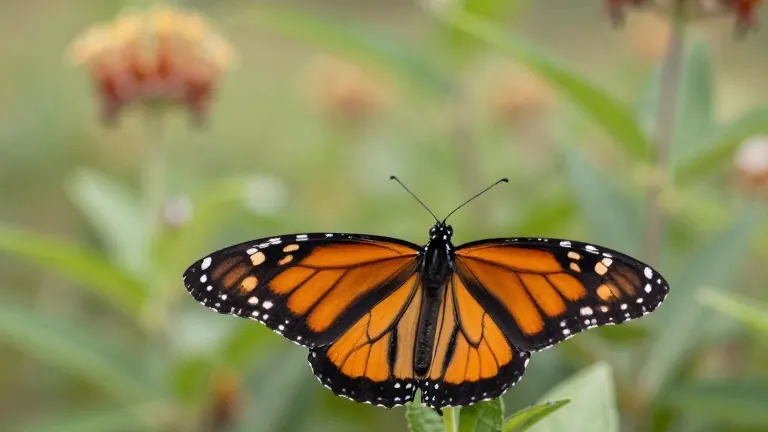
Nearly 1,750 monarch butterflies carry solar-powered radio tags this year, according to researchers tracking their annual journey. The devices weigh about as much as a drop of water and were developed by Cellular Tracking Technologies. These tags allow scientists to monitor the insects as they travel up to 3,000 miles from southern Canada to central Mexico.
Rebeca Quiñonez-Piñón, a senior scientist at the National Wildlife Federation, leads the effort to identify critical stopover locations. Habitat loss, pesticides, and climate change are reducing monarch populations, making these rest sites vital for survival. The National Wildlife Federation recently joined a tri-national science team for this research. The project combines real-time tracking with community science to understand where butterflies settle in Texas and elsewhere.
The data has already revealed new patterns in migration. Since last year, scientists detected a butterfly in Utah joining eastern populations in Mexico. Others traveled down the Eastern Seaboard to Florida and crossed the Gulf of Mexico. Emma Pelton, a senior conservation biologist with the Xerces Society, said these connections were previously hypothesized but unproven. She noted that the team is thrilled after the first year of using lighter equipment.
About 175 tagged butterflies have been detected in Mexico since the current migration began. Not all monarchs are suitable for tagging. David La Puma, vice president of global market development for Cellular Tracking Technologies, stated that most tagged butterflies weigh more than 400 milligrams. Researchers select individuals with longer wings to ensure the tags do not overburden the insects. The tagging process involves netting the butterflies, cooling them, and applying adhesive to their abdomens.
Louie Yang, an insect ecologist at the University of California, Davis, described the technology as remarkable. He noted that it provides visibility into paths and speeds that were previously unknown. However, the system has limitations. The technology identifies receiver locations rather than exact positions, and a detection does not confirm the butterfly is still alive. Yang said further studies are needed to determine if the tags affect behavior.
Eastern monarch populations have dropped more than 80% since the mid-1990s, while western populations have declined by about 95%. Tierra Curry, a senior scientist at the Center for Biological Diversity, cited climate change as a primary threat. She explained that prolonged heat in northern areas delays migration cues, reducing the chance that butterflies reach Mexico. The Trump administration delayed a decision on federal protections for monarchs late last year. A court ordered the government to make a final decision by 2030.
Source: KPBS