Lunar Lander: Griffin-1 passes JPL stress tests
Voyager Technologies’ robotic lander survived extreme vibration and thermal trials, clearing a 455-kilogram payload for a year-end mission to the moon's south pole.
By Katherine Barnes ·
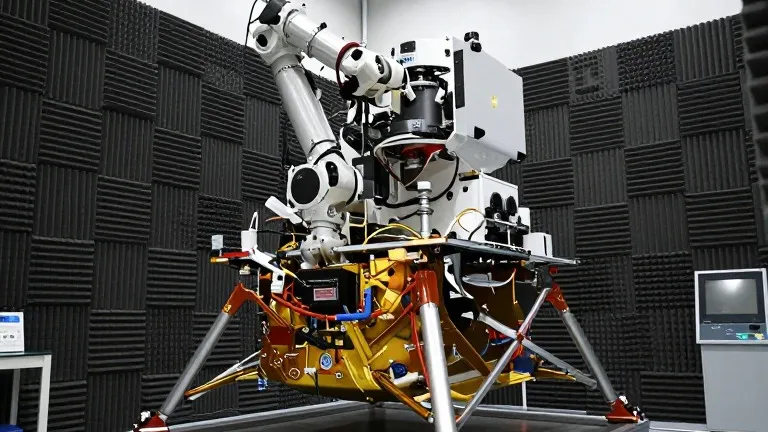
Voyager Technologies’ Griffin-1 lander has finished a grueling series of ground tests at NASA’s Jet Propulsion Laboratory. The spacecraft survived conditions meant to mimic the violent forces of launch and the extreme cold of the lunar surface. This final check moves the project closer to its scheduled launch later this year.
The lander is designed to carry a heavy load to the moon. It will transport more than 1,100 pounds, or 455 kilograms, of cargo to a site near the lunar south pole. The payload includes various science experiments and new technologies intended for surface testing. One key component is Astrolab’s FLIP rover, which carries a supercomputer for data processing in space.
JPL engineers subjected the vehicle to intense vibration and loud acoustic noise. They also exposed it to extreme temperature swings to ensure structural integrity. An image from August 31 shows the spacecraft inside JPL’s 25-foot-wide space simulator. The facility has a long history of preparing robotic explorers for deep space travel, a legacy dating back to the Ranger program in the mid-1960s.
Charles Whetsel, manager of JPL’s Exploration Systems Development Office, confirmed the lander passed the full environmental suite. He stated that the laboratory is proud to support this new phase of commercial lunar exploration. The Griffin-1 mission operates under NASA’s Commercial Lunar Payload Services initiative. The data and infrastructure developed from this flight are intended to help build a crewed moon base in the next five years.
Source: Space.com