Station Expansion: Harmony Node Doubles Interior Volume
The 24-foot module delivered in 2007 transformed the ISS from a three-bedroom equivalent to a five-bedroom complex.
By Emma Mehta ·
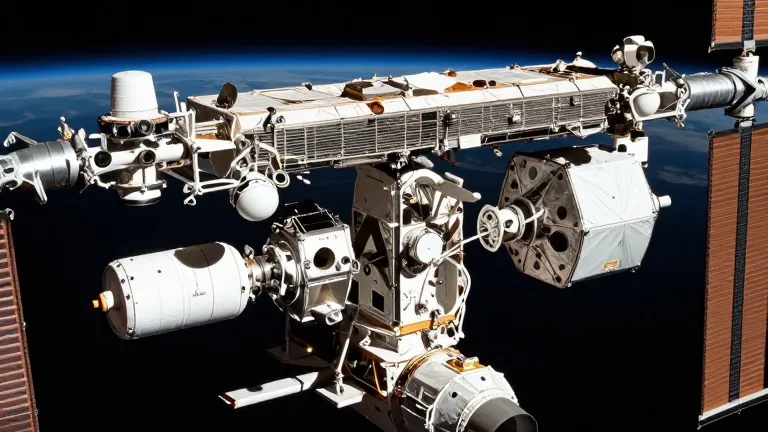
The International Space Station’s interior volume doubled when the Harmony module was permanently berthed in 2007. The 24-foot-long utility hub, delivered by the space shuttle Discovery during the STS-120 mission on October 23, expanded the outpost from a footprint comparable to a three-bedroom house to one resembling a five-bedroom home. This physical expansion created the necessary infrastructure for subsequent international laboratory modules.
Harmony, originally designated Node 2, serves as the central connection point for the station’s international partners. Built by Italy-based Thales Alenia Space for NASA, the module features five common berthing mechanisms that act as connection points for other segments. It links the European Space Agency’s Columbus laboratory on the starboard side and Japan’s Kibo laboratory on the port side. The module also houses the primary sleeping quarters for American astronauts.
The installation process required a specific reconfiguration of the station’s docking capabilities. Upon arrival, the crew initially attached Harmony to the Unity node as a temporary measure. After the shuttle departed, astronauts utilized the station’s robotic arm to reposition the shuttle docking port at the Destiny module. This maneuver cleared the forward port for Harmony’s permanent installation beside Destiny.
The arrival of Harmony marked a distinct shift in the station’s growth timeline. Prior to this mission, the last new room added to the complex was Russia’s Pirs docking module in 2001, a structure that has since been removed. By providing a new hub for future attachments, the STS-120 mission enabled a new phase of construction and international collaboration.
Inside the module, eight payload racks manage the station’s internal operations. Four of these racks are dedicated to avionics, while the remaining four accommodate stowage or crew facilities. The module’s roof includes a docking port that allows visiting vehicles to park there, and other ports have hosted cargo ships. The name Harmony was selected through a public naming contest run by NASA.
The 14-foot-wide module measures roughly the length of a minibus. Its placement fundamentally altered the station’s geometry, allowing for the integration of larger laboratory sections that could not previously be attached. The module’s design prioritized utility and connectivity, serving as the structural backbone for the station’s international laboratory wing.
Source: Space.com
More Business · Tech news · Watch Your Wallet · Report a business · Got a Story?