UK Families Buy More Food and Water After Government Emergency Advice
Households across Britain are increasing their grocery purchases of staples and power sources following a new official push to store three days of supplies.
By Emma Mehta ·
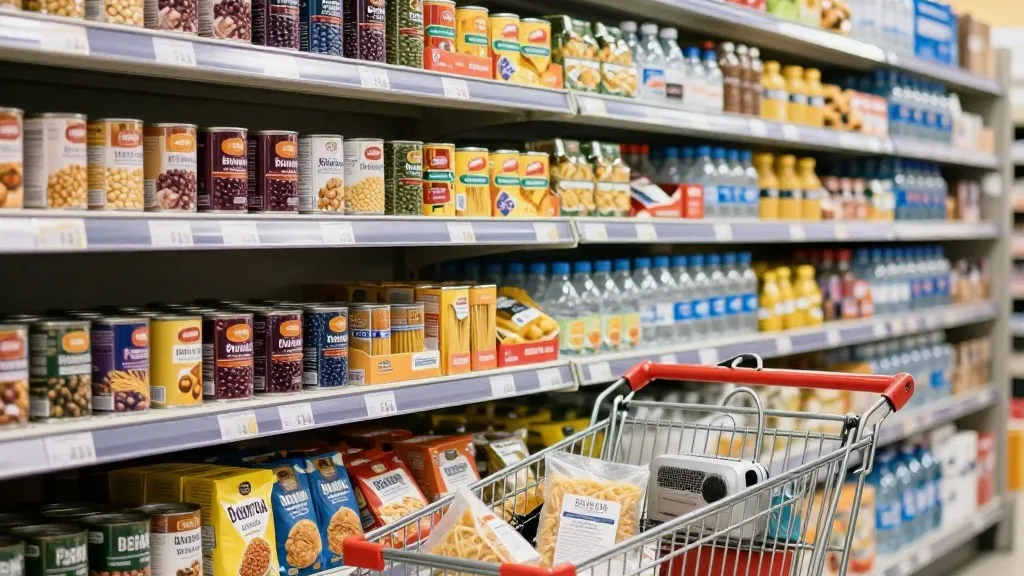
The government officially launched a new campaign on Thursday, advising residents to hold onto three days worth of essential supplies. This directive aims to help citizens manage a broad spectrum of potential crises, ranging from weather events to geopolitical tensions. While the specific launch date marks the public start of the initiative, many families report that they have been quietly increasing their pantry stocks for months in response to earlier ministerial signals.
The recommended stockpile includes non-perishable food, bottled water, necessary medications, and backup power sources. These items, which might resemble props from a disaster movie, are becoming standard shopping list additions. The advice is framed as a response to concerns over state-sponsored threats from Russia and the intensifying impacts of the climate crisis on domestic infrastructure.
Lawrence Barratt, a resident of Hythe in Hampshire, began this process about two weeks ago. He now adds tinned goods like beans, soups, and chilli con carne to his weekly shop, alongside rice and noodles. He is purchasing these items slowly to ensure he has enough for two people for three days. His preparation also includes a first aid kit, a battery radio, a torch, and a portable power bank that he believes can charge phones and run small appliances. Barratt admitted that seeing the government's online advice made him realize he was previously unprepared for any significant disruption.
In Greenwich, London, Marco Camurri is taking a similar approach with his family. He is collecting pasta, stock cubes, tinned food, and toilet paper, driven by memories of the shortages seen during the 2020 lockdown. Because he has relatives in continental Europe, his family has a contingency plan to leave if the UK enters a state of war or faces severe infrastructure failure. They keep their garden wood ready for boiling water and maintain their car fuel tanks above fifty percent, which provides about three hundred miles of driving range.
Camurri’s family started preparing a few months ago when reports linked El Niño to potential supply chain issues. They treat their extra stock as one additional week of normal shopping, rotating items so they eat what they store. They now track expiration dates on a spreadsheet to ensure their reserve remains fresh. Jack Davenport in North Shields also cited El Niño as a factor, though he noted the difficulty in judging the scale of modern threats. He pointed to climate disasters, Russian threats, and aging infrastructure as key concerns, suggesting the government is trying to reduce long-term panic by acknowledging these risks.
Not all residents agree with the new guidance. Deirdre O'Sullivan from Leicester described the advice as foolish, comparing it to 1970s instructions to hide under tables during nuclear attacks. She argued that the three-day timeframe is inadequate for a true emergency and that a severe food shortage would likely be evident over a much longer period. She likened the policy to a bureaucratic maneuver designed to show that a plan exists, even if it appears practically useless.
Source: The Guardian