Chinese Chipmakers Face Rising Costs as They Bypass EUV Restrictions
Multiple DUV exposures allow for advanced nodes, but experts say the method increases defects and production time for firms like SMIC and CXMT.
By Emma Mehta ·
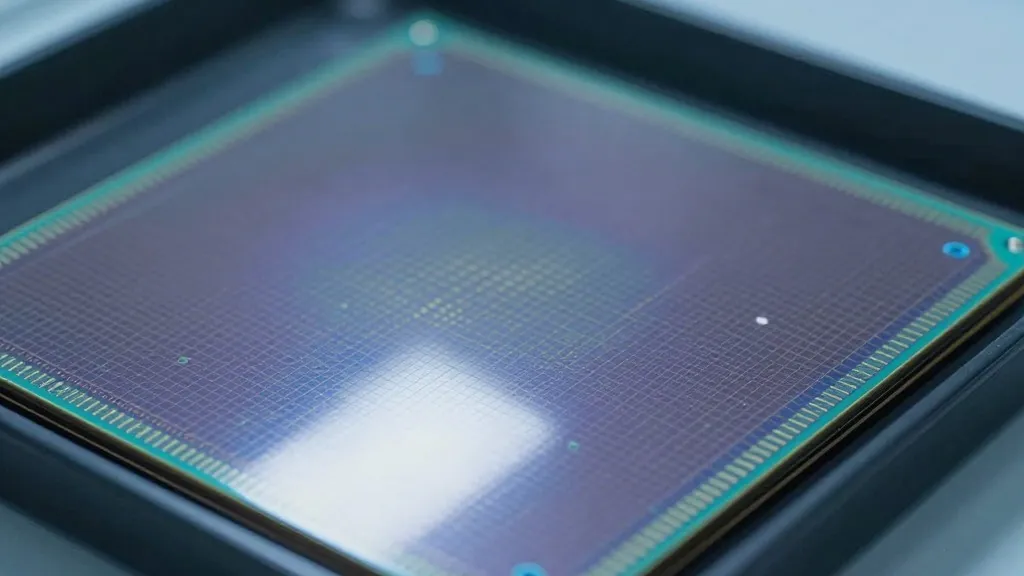
Chinese semiconductor firms are using multiple deep ultraviolet exposures to produce advanced chips despite being blocked from extreme ultraviolet machines.
Export controls prevent ASML from selling its latest EUV lithography tools to China. This forces local manufacturers to rely on older DUV equipment. The workaround involves exposing critical chip layers several times to create fine features.
Experts tell Tom's Hardware that this method works but increases costs. Each additional exposure raises the chance of defects and extends production time. ASML remains the sole maker of EUV machines, which use 13.5-nanometer light for precision printing. Some analysts estimate the technology gap between China and the West is at least five years.
China has nonetheless made progress. A 2023 teardown of the Huawei Mate 60 Pro showed its Kirin 9000S processor was built by SMIC using a 7-nanometer-class process without EUV. Recent analysis of the Kirin 9030 suggests SMIC has moved its DUV-based process closer to 5-nanometer density. It still trails TSMC and Samsung in overall scaling.
Chris Mack, co-founder and CTO of Fractilia, notes that the industry previously believed three 193-immersion exposures cost about the same as one EUV pass. At four masks, EUV becomes the cheaper option. Mack warns that more exposures lead to accumulated overlay errors. Designers must add space around features to compensate, which enlarges the chip and reduces the number of dies per wafer. He stated, "You don't sell wafers, you sell die."
Morgan Stanley reports that CXMT produces about one-third as many bits per wafer as Western rivals. The bank calls lithography access a hard ceiling for Chinese memory development. Micron developed its 1-alpha DRAM without EUV, using tight process control. Morgan Stanley believes CXMT can achieve similar results for HBM3e without EUV. However, Micron eventually adopted EUV for its 1-gamma DRAM to gain a 30% increase in bit density.
Morgan Stanley projects CXMT will lift its global DRAM bit supply share from 14% in 2026 to 16% in 2028 through new capacity. The bank expects China's AI chip self-sufficiency to rise from 42% in 2025 to 70% by 2030. EUV, high-bandwidth memory, and advanced software will remain persistent gaps in the meantime.
Source: Tom's Hardware
More Business · Tech news · Watch Your Wallet · Report a business · Got a Story?