Ethiopia Accepts Delivery of 12 Su-35 Fighters and Orders S-400 Systems
Prime Minister Abiy Ahmed confirmed the transfer in Moscow, citing a $1.3 billion trade surge and renewed internal conflicts as drivers for the expanded military partnership.
By Imani Donovan ·
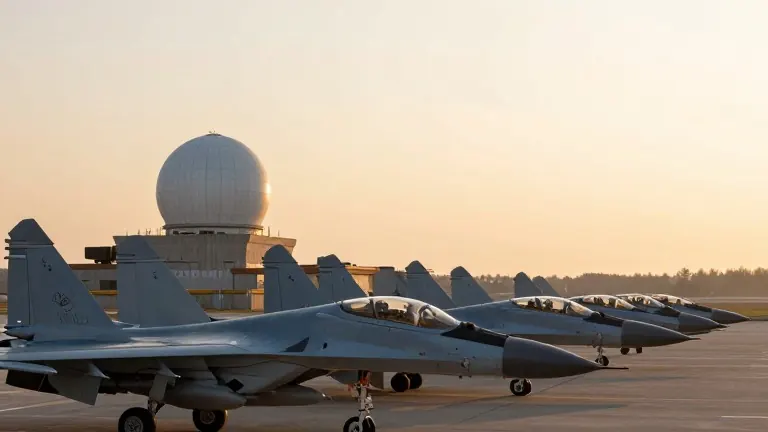
Addis Ababa now operates a larger fleet of Russian-built combat aircraft following a formal handover in Moscow.
Ethiopian Prime Minister Abiy Ahmed announced on Wednesday that his country had taken delivery of 12 Su-35 fighter jets. The jets arrived one year ahead of the original schedule set in a previous bilateral agreement. Abiy also confirmed that four S-400 air defense batteries are part of the deal, though he did not provide a specific timeline for their arrival. The new assets will join an air force already equipped with Russian fighter jets.
The financial dimension of the partnership expanded sharply in the past year. Russian President Vladimir Putin stated that bilateral trade between the two nations exceeded $1.3 billion between January and September. That figure is more than double the total for the entire year of 2025. Putin identified energy, agriculture, industry, and education as key areas for future cooperation. He noted that the relationship extends beyond defense to include nuclear energy and health initiatives.
Benedict Manzin, a lead analyst at risk consultancy Sibylline, described the arrangement as a continuation of a decades-long alliance. He noted that the Soviet Union originally supported Ethiopia’s communist government, creating a foundation for current military cooperation. Manzin explained that the S-400 systems are best suited to counter conventional air threats, including Eritrea’s limited air force and drones. However, he cautioned that such systems can be overwhelmed by small, inexpensive drones, a dynamic observed in Ukraine.
Moscow benefits from the deal through arms revenue and sustained diplomatic influence. Manzin stated that weapons sales are a primary export for Russia in Africa, providing income while binding governments to ongoing training and maintenance relationships. This strategy allows Russia to maintain influence even as Western sanctions restrict its international standing. Russia supplied 15 percent of major weapons imports to Africa between 2021 and 2025, according to the Stockholm International Peace Research Institute. That share placed it behind the United States at 19 percent and China at 17 percent.
The delivery occurs during a period of heightened domestic and regional tension for Ethiopia. Fighting between federal forces and Tigrayan units intensified in late September, effectively undoing the November 2022 peace agreement. A seven-group alliance formed to challenge Abiy’s government, prompting government troops to enter Mekelle, the capital of Tigray, in early October. Addis Ababa has since installed a six-month caretaker administration, though rebel commanders have vowed to continue fighting. Abiy said the new equipment would strengthen Ethiopia’s ability to preemptively deter aggression. He acknowledged that the timing coincides with conflict in Tigray and speculation about war with Eritrea.
Ethiopia is not shifting exclusively toward Moscow. The country maintains a large Chinese presence and continues to attract Western investment. Manzin suggested that Ethiopian leaders are widening their options rather than committing to a single partner. African states recognize they are a focal point of geopolitical competition, which allows them to seek support from multiple powers simultaneously. The new jets and air defense systems integrate into a broader strategy to manage security threats while leveraging the country’s status as Africa’s second-most populous nation.
Source: Al Jazeera