Likud Leads Israel Polls But Falls Short of 61 Seats
Both camps face a fragmented parliament where uncounted military ballots and Arab party support will determine the next government.
By Emma Mehta ·

Benjamin Netanyahu’s Likud party has emerged as the largest single force in Israel’s new parliament, but neither he nor his rival Gadi Eisenkot holds the 61 seats required for a governing majority. Initial counts show the right-wing bloc is close to the threshold, yet analysts warn the early results are skewed toward areas with strong right-wing support. The final outcome hinges on thousands of uncounted absentee ballots, mostly from soldiers, which are expected to shift the balance in the coming days.
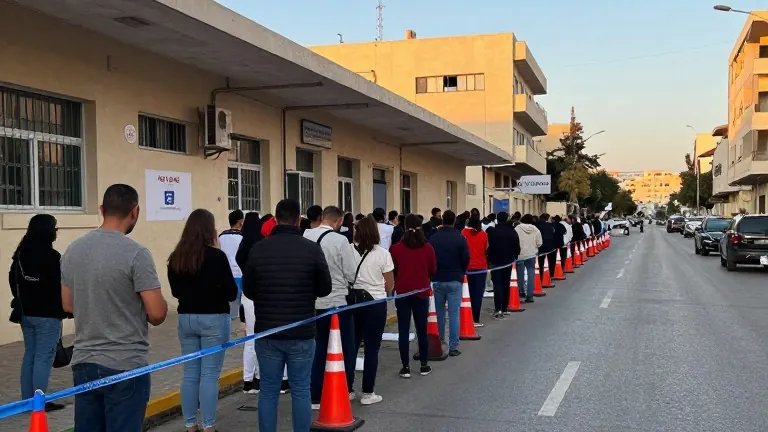
Turnout for the election exceeded 77 percent, a surge that contradicted predictions of a lopsided victory. Eisenkot, the former army chief leading the Yashar party, also faces a fragmented opposition. To reach a majority, his camp appears dependent on parties led by Israel’s Arab minority, a group that has equaled or surpassed its previous record number of seats. During the campaign, most Jewish opposition parties pledged to avoid governing with Arab-majority lists, citing differences in shared values.
Arab Israelis, who make up one-fifth of the population, turned out in high numbers for this vote. Many viewed the election as a chance to unseat what they consider Israel’s most right-wing government. The current administration, which has pursued a hardline religious and nationalist path for four years, faced mass protests over judicial overhaul plans before the wars in Gaza, Lebanon, and Iran began after the October 7, 2023, attacks.
Both leaders addressed their supporters overnight, claiming a mandate to form a government. Netanyahu told his base that the right-wing bloc has a decisive majority among the Jewish public. He stopped short of declaring an outright win, stating that a strong national right-wing government must be formed. Eisenkot declared that the public has chosen change, accusing the current coalition of losing the people’s trust. He pledged to work quickly with partners to form a stable Zionist government.
Polling data suggests the political landscape has not shifted as much as many expected. Professor Tamar Hermann, a pollster at the Israeli Democracy Institute, noted that the relative weight of pro-Netanyahu and anti-Netanyahu voters remains similar. She observed that many expected Netanyahu to fall after the war, but his support held steady.
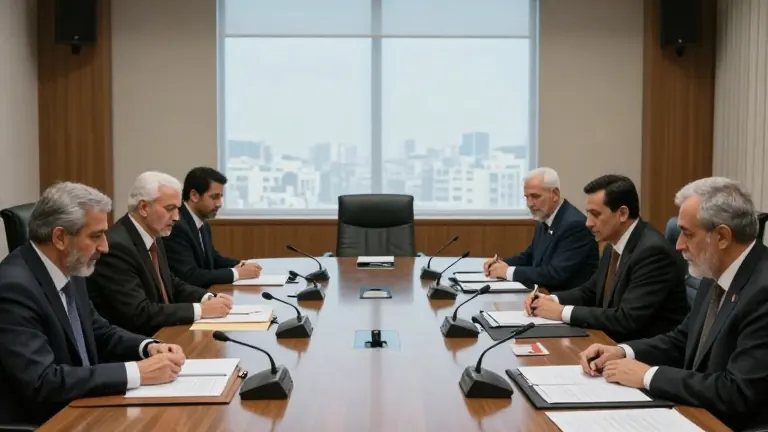
Coalition talks are already beginning as parties maneuver for power. Yaakov Katz, a veteran Israeli journalist, described the process as intense political wrangling where leaders will try to pull in defectors or form minority governments. Smaller parties typically demand cabinet positions, budget allocations, or specific policy wins in exchange for their support.
The key question is whether the opposition will break with past conventions to ally with Arab parties. Avigdor Lieberman, a leader in the opposition camp, said he would not sit in a minority government relying on their support. Mansour Abbas, head of the Ra’am party, said he expects partners to be more open to an alliance after the vote. He noted that politicians often change their language after elections and that his party is prepared for the negotiations.
Israel’s President Isaac Herzog will receive the final results next week. He will consult with all elected party leaders and ask the candidate most likely to form a coalition to attempt it. If that candidate fails to secure a majority within six weeks, other leaders may be given a chance. If no coalition forms, a new election will be scheduled. Until then, Netanyahu’s government continues in a caretaker role without the power to enact major policy changes.
Source: BBC News