Geneva's Fabyan estate held a secret wartime codebreaking lab
Before the government took over cryptanalysis in 1917, a private tycoon used his Illinois estate to break German codes during World War I.
By Imani Donovan ·
George Fabyan spent his own money to break German military codes during World War I, a fact documented in a 1993 history by the U.S. Army’s Center for Military History. The work took place at his estate in Geneva, Illinois, and it ended in 1919 when the war concluded.
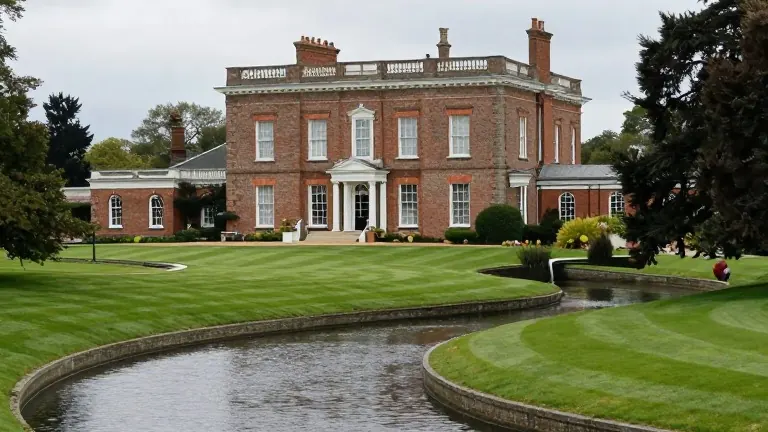
The estate, now known as the Fabyan Villa Museum and Japanese Garden, sits on 300 acres along the Fox River. Preservation Partners of the Fox Valley currently manages the site. The property includes a villa that Frank Lloyd Wright renovated for the couple, as well as a forest preserve and a parkway that bear the family name.
Fabyan, often called Colonel, and his wife, Nelle, moved to Geneva in 1905. They acquired the land and transformed it into a large showplace. The grounds featured fountains, gardens, a Roman-style swimming pool, a Dutch-style windmill, a private zoo, a working lighthouse, a boathouse, greenhouses, tennis courts, and laboratories.
While the estate displayed the couple’s wealth, Fabyan used it for scientific research. He inspired a group of thinkers who worked on acoustics, cryptography, genetics, and physiology. Richard Munson, the author of a book about Fabyan, described him as an ideas man who created perhaps the first independent research center.
Munson wrote that Fabyan laid the foundation for the top-secret National Security Agency. He noted that Fabyan helped end World War I by breaking German codes. According to the Army history, no federal agency was doing cryptanalytics before 1917.
However, Fabyan began this work in June 1916. He operated Riverbank Laboratories at his Geneva compound. A small group of trained cryptanalysts worked on codes forwarded by the War, Navy, State, and Justice Departments. This patriotic enterprise ran entirely on Fabyan’s personal funds.
The couple’s interests extended beyond cryptography and architecture. Fabyan attempted to prove that William Shakespeare did not write the plays attributed to him. He also established the Riverbank Acoustical Laboratories, which still operates next to the Fabyan Forest Preserve.
Nelle Fabyan focused on animals and horticulture. She kept kennels for prize-winning dogs and grew flowers in greenhouses to sell to Chicago hotels and restaurants. Terry Emma, executive director of the Geneva History Museum, presented new details about Nelle’s life at a September event. Emma cited a 1920 magazine interview that described Nelle as a socialite, farmer, sculptor, and philanthropist.
George Fabyan died in Geneva in 1936. His wife Nelle died there three years later. Their legacy remains embedded in the local geography and the ongoing operations of the acoustical labs.
The Riverbank Laboratories continued their work on acoustics long after the war. The Fabyan name persists on local roads and preserves. The estate serves as a museum and a reminder of a private effort that influenced national security history.
Source: Shaw Local Lake County