Tesla Admits Need for Proprietary Maps to Fix FSD Navigation Flaws
The automaker is developing an internal mapping system to address persistent issues with speed limit recognition and route selection in its Full Self-Driving software.
By Emma Mehta ·
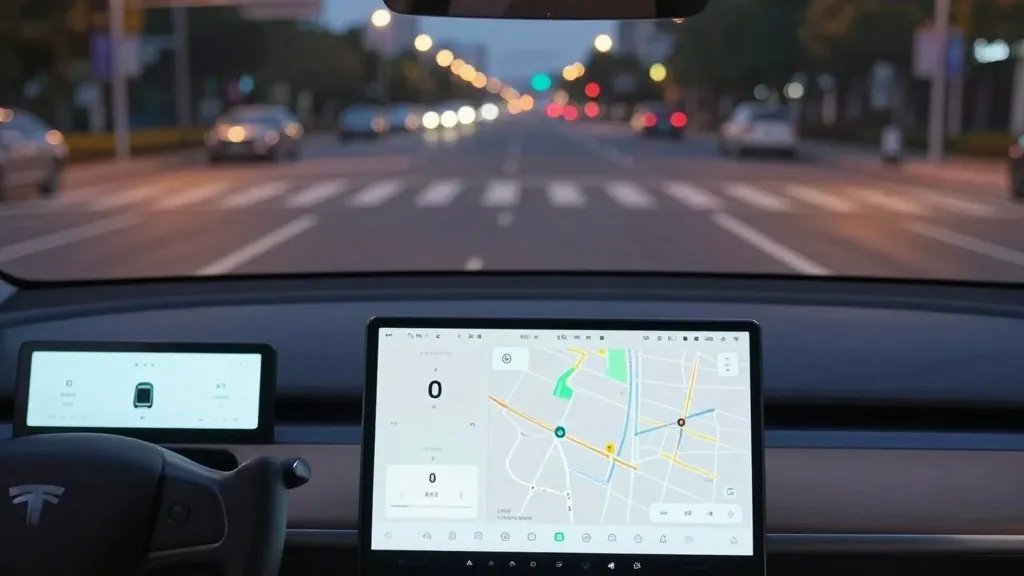
Tesla has long championed a camera-only approach to autonomous driving, but a new internal strategy reveals a significant pivot in how the company handles navigation data. On the Q3 2026 earnings call, the company confirmed it is building its own maps to resolve common failures in its Full Self-Driving system. This development marks a distinct departure from previous public statements that suggested detailed mapping was unnecessary for true autonomy.
Ashok Elluswamy, Tesla’s VP of AI, outlined the new architecture during a shareholder Q&A session. He acknowledged that the company should not rely on external providers for critical driving data. The new system will use an AI-based mapping framework fed by data collected from Tesla’s global fleet. This proprietary layer will learn individual driver preferences and respond to voice commands, aiming to improve the start and end of trips in the upcoming FSD v15 release. Over the coming months, the technology is expected to take over navigation, parking, and destination handling.
The decision follows years of public debate regarding the utility of maps in self-driving technology. In 2015, Tesla initially promised high-precision maps with significantly greater granularity than standard navigation tools. By 2019, however, CEO Elon Musk had reversed this stance, labeling high-precision lane maps a mistake that made systems brittle. He famously dismissed lidar as a fool’s errand, arguing that cameras and AI were sufficient for driving anywhere. Now, the company is implementing a map layer specifically to correct errors its vision system frequently makes.
The specific issues Tesla aims to solve include reading speed limits, identifying parking spots, and selecting typical routes. These are fundamental aspects of understanding the driving environment. Recent findings highlight the severity of these errors. A Belgian road safety group reported last month that FSD vehicles exceeded speed limits in 55% of tested 30 km/h zones in Brussels. The cars averaged 44 km/h, often because the interface displayed an incorrect 50 km/h limit. In the United States, the NHTSA is weighing an investigation into claims that Robotaxis speed through active school zones, involving roughly 1,000 Model Y and Cybercab vehicles.
This approach mirrors the operational model of Waymo, which uses sensor-equipped vehicles to map cities before launching service. While Waymo utilizes lidar for high-definition mapping, Tesla’s method relies on a collective fleet learning process without that specific hardware. The similarity suggests that both companies are solving the same problem with comparable strategies, differing mainly in their sensor choices. Tesla’s Robotaxi service already operates within geofenced areas, a constraint that aligns closely with the need for detailed local data.
The shift raises questions about the long-term vision for unsupervised FSD in consumer vehicles. The company has targeted Q2 2027 for broader deployment, but the reliance on a newly built map system adds complexity to that timeline. Critics argue that the years of messaging suggesting maps were a crutch for competitors have created a gap between public expectations and technical reality. As Tesla integrates this new mapping layer, the distinction between its vision-based autonomy and other leading self-driving programs may become increasingly blurred.
The new mapping architecture represents a pragmatic solution to immediate user complaints rather than a fundamental change in the underlying AI philosophy. By leveraging the vast amount of data already collected by millions of vehicles, Tesla can refine its navigation capabilities without waiting for the next generation of hardware. This strategy allows the company to address specific pain points, such as misreading signs, while maintaining its core commitment to a vision-centric driving system.
Source: Electrek · original report published