Midterm Strategy: Trump shifts campaign focus to remote rallies
The president canceled in-person events in the Midwest to conduct a three-day series of telephonic rallies aimed at boosting Republican candidates nationwide.
By Emma Mehta ·
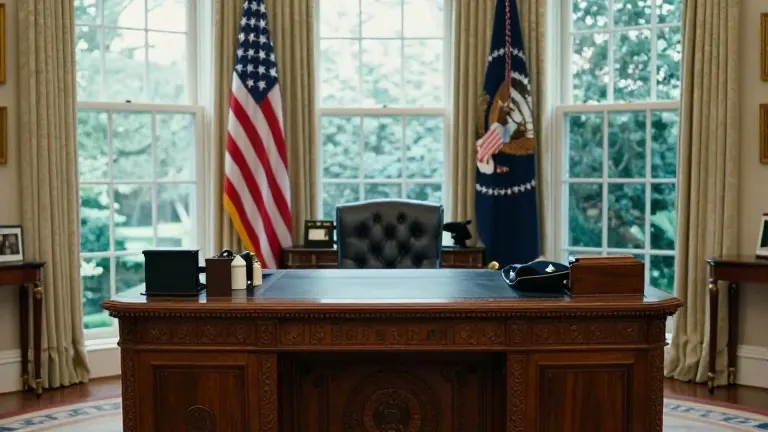
President Donald Trump replaced his scheduled weekend in-person rallies with a series of remote appearances as the 2026 midterm elections approach.
The decision was announced by the Republican National Committee on Thursday evening, just days before voters head to the polls.
This strategic shift occurred while the president was already in South Carolina, where he traveled to support Republican Senate candidate Darline Graham.
Graham is contesting a seat that Republicans have held for nearly three decades. She faces Democrat Annie Andrews, a pediatrician who previously sought a congressional seat.
The change in plans affects events in Iowa and Kansas, where Trump was set to campaign on Saturday and Sunday respectively.
Instead of traveling to those states, the president will lead a 72-hour sprint of telerallies across nearly 20 states.
The RNC stated that this format allows the president to address voters in more locations simultaneously.
Under this new arrangement, Trump is expected to speak for approximately 10 minutes per event, a significant reduction from the 90-minute speeches typical of in-person rallies.
Trump denied that health issues prompted the change in schedule.
He stated he was not traveling to Kansas because incumbent Senator Roger Marshall was performing well against his Democratic challenger.
The president expressed confidence in the upcoming election results, predicting a strong performance for Republicans on Tuesday night.
Beyond the Senate race in South Carolina, the campaign is monitoring tight contests in Texas, Ohio, and Alaska, among other states. In Alaska, the Justice Department issued new subpoenas related to an investigation into the state's Senate race. The department also appointed a special master in California to review claims regarding noncitizens on voter rolls. The president has described the Alaska situation as a conspiracy and has questioned whether the Democratic candidate, Mary Peltola, would be seated if she wins. Peltola has called the recent media reports a distraction from issues such as the war in Iran. In Iowa, Democratic gubernatorial nominee Rob Sand is urging voters to act before November 3 to avoid post-election regret. He has acknowledged that a Republican legislature will likely complicate governance if he takes office. The final days of the campaign have seen both parties make rapid adjustments to their spending and travel schedules in an effort to secure control of Congress.
Source: The San Diego Union-Tribune