Trump targets Iowa and Kansas as GOP defends congressional majorities
The president campaigns in states he previously dominated while Democrats contend with internal divisions in Michigan.
By Emma Mehta ·
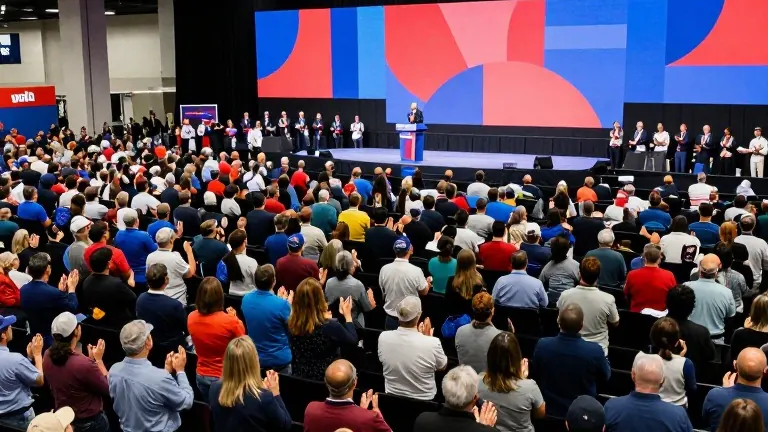
The final days of the 2026 midterm campaign have shifted focus from expanding territory to protecting existing gains. President Donald Trump is concluding his rally tour in Iowa and Kansas, two states where Republican victories were expected in previous cycles but are now competitive.
More than 52 million votes have already been cast in early and absentee ballots. These numbers reflect a defensive posture among Republicans who are fighting to maintain control of the U.S. Senate and a fragile majority in the House of Representatives. The elections have become a direct referendum on the first two years of Trump's second term in the White House.
Trump’s schedule for the final weekend begins on Sunday afternoon in Dubuque, Iowa. The city lies within the 2nd Congressional District, a race that has become competitive as Democrats target House seats. Republicans in Iowa are also battling to hold the governor's office and the state's Senate seat, a position that has historically favored the party.
On Monday, Trump will visit Salina, Kansas, to close out the pre-election campaigning period. The state is the site of a major challenge from Adam Hamilton, a Democrat running to become the first person from his party to win a Senate seat in Kansas in 94 years. This race represents one of the few opportunities for Democrats to flip a state that has leaned heavily Republican for decades.
The political environment has changed since the 2024 election cycle. Trump previously focused on flipping states that backed Joe Biden in 2020. This year, the strategy has reversed. Voters, including some previous supporters, are questioning the economic impact of federal tariffs and the military conflict in Iran. These factors have contributed to tighter races in states where Republicans held strong majorities in the past.
Democrats face their own complications as they attempt to retake congressional majorities. In Michigan, a critical state for Senate control, nominee Abdul El-Sayed is involved in a public dispute with former primary opponent Rep. Haley Stevens. Stevens, who initially planned to appear with El-Sayed at a church event, instead attended a separate service with Republican candidate Mike Rogers.
Stevens has criticized El-Sayed for being insufficiently supportive of Israel. Her fiancé stated last week that he was voting for Rogers, claiming El-Sayed had not done enough to address concerns within the Jewish community. Rep. Debbie Dingell, who organized the planned joint appearance to unify the party, said she asked Stevens not to attend. Dingell reported that Stevens agreed to that arrangement.
Sen. Bernie Sanders, a supporter of El-Sayed, addressed the potential for a fractured Democratic vote on CBS’ “Face the Nation.” He noted that Stevens lost a close primary and could be upset by the result. Sanders said he observed voters across the state standing with El-Sayed. “But from what I can see, all over the state, people are standing up, they’re gonna stand with Abdul,” Sanders said.
Michigan is a key component of the Democratic strategy to regain the Senate. If Democrats lose that seat on Tuesday, they will face increased pressure to win races in more traditionally Republican states such as Texas, Ohio, or Kansas. The outcome in Michigan will determine whether the party can secure a majority with fewer total seats or must push for more difficult wins in deeper red territory.
The campaign’s closing stretch has tested the strength of the Republican Party, which Trump has reshaped over the last decade. He held more than two dozen rallies in October to energize loyal voters. During these events, Trump frequently commented on the physical appearance of male politicians he was supporting. On Saturday, Trump paused his rally schedule to attend a jungle-themed Halloween party at his Mar-a-Lago resort in Florida, where he told guests the country had never done better.
Outgoing Rep. Don Bacon of Nebraska raised concerns on Sunday that federal policies, particularly tariffs, could impact Republican performance. He stated on CNN’s “State of the Union” that tariffs are not popular in the Midwest and that he had communicated this to the president. Bacon predicted a debate within the party regarding its future direction if there are substantial losses this week.
Sen. Tim Scott of South Carolina, chair of the National Republican Senatorial Committee, expressed confidence in the party's prospects. He told NBC’s “Meet the Press” that Republicans would keep the Senate. Scott noted that Trump has stated the midterm election is about him and that his agenda is on the ballot.
Source: The San Bernardino Sun