Supreme Court Keeps California Ballots
The high court declined to pause the mail-in votes of 20,000 individuals flagged as potential non-citizens ahead of Tuesday's midterm elections.
By Imani Donovan ·
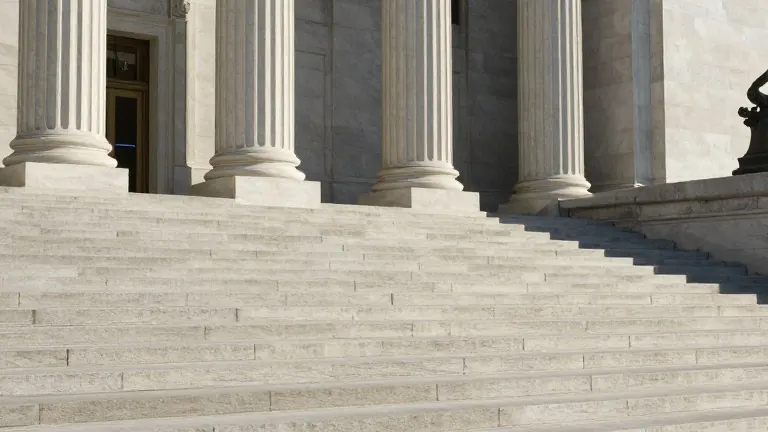
The United States Supreme Court on Monday rejected an emergency request from the Trump administration to set aside thousands of mail-in ballots in California. The decision preserves the eligibility of approximately 20,000 voters whom the Department of Justice identified as potentially not being citizens. This ruling occurred one day before the midterm elections, which will determine control of Congress for the final two years of President Donald Trump's second term.
The legal dispute began when federal authorities sought to remove specific voters from the state's rolls. California election officials argued that the federal list contained numerous errors and that removing the ballots would disenfranchise legal voters. The Supreme Court did not provide a detailed explanation for its decision, a standard practice for emergency rulings. In September, the justices had similarly declined to intervene in a separate Trump administration effort to restrict mail-in voting nationwide.
Federal district judges had previously blocked the administration's efforts. On Monday, Judge James Boasberg in Washington ruled that the government's last-minute demands on California election officials violated the U.S. Constitution. He noted that the Elections Clause grants exclusive authority over election rules to the states and Congress. Meanwhile, a different federal judge denied a request from the Department of Justice to remove the ballots, warning that the move could strip voting rights from citizens.
The Trump administration has focused heavily on identifying non-citizen voters this year. Officials maintained that separating the disputed ballots was a modest request designed to ensure only legal votes were counted. However, critics pointed to a history of judicial setbacks for the administration in this area. Observers noted the administration waited until weeks before the election to present its demands to California officials. The Department of Justice has acknowledged that its data list is not entirely reliable.
During a hearing regarding a prior order that barred the administration from threatening election workers, District Judge Trina Thompson questioned the accuracy of the federal data. She asked Kenneth Kao, a Department of Justice attorney, if he agreed there was a high error rate in the reports. Kao replied that it was a fair assertion and that the department sought help from registrars to verify voter validity. Despite this admission, Bill Essayli, the federal prosecutor for the Los Angeles office, stated at a press conference that he was confident the individuals on the list were not entitled to vote. He described the list as fact rather than theory, though he later conceded that errors might exist.
Voting in California began in early October, with mail-in ballots sent to roughly 23 million registered voters. State officials said that processing hundreds of thousands of ballots had already occurred. They stated that locating and separating the disputed ballots at this late stage would be logistically impossible. A federal appeals court panel had earlier upheld the district court's order by a vote of two to one. Two judges, one appointed by Trump and one by Biden, voted to keep the ballots, while a third judge appointed by Trump dissented.
California Attorney General Rob Bonta, a Democrat, criticized the federal appeal as a desperate attempt to undermine the elections. He said the move aimed to trample the rule of law. District Judge David O. Carter, who was nominated by President Bill Clinton, had written that allowing the executive branch to dismiss votes based on unfounded accusations would put the democracy in danger. The Department of Justice had previously requested an early intervention from an appeals court to speed up the case, but that request was unsuccessful.
The election is scheduled for Tuesday, and the results will shape the balance of power in the federal government for the remainder of the current presidential term. The Supreme Court's decision effectively allows California to proceed with counting the votes without pausing the process for the specific group of voters in question.
Source: KTVW-DT