UC San Diego Scientist Wins $15M Grant to Map RNA Structures
A new Department of Energy project aims to use artificial intelligence to predict the 3D shapes of RNA molecules, a task that has historically taken years to complete.
By Emma Mehta ·
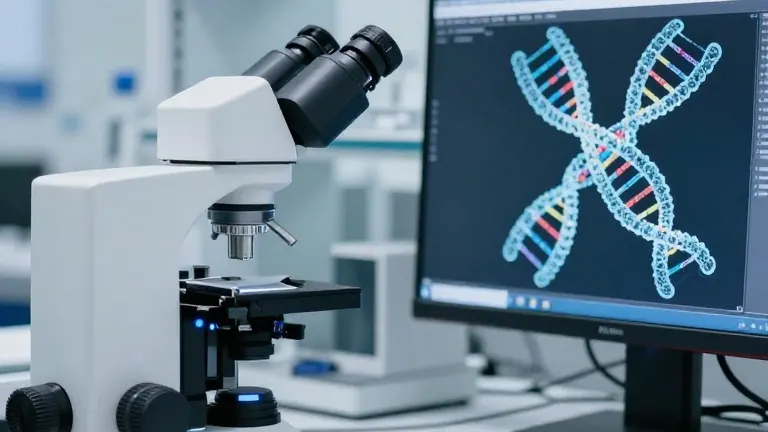
Navtej Toor, a professor of biochemistry and molecular biophysics at the University of California San Diego, will lead a new initiative to determine the three-dimensional shapes of RNA molecules. The project is supported by a $15 million award from the Department of Energy (DOE). Toor’s team plans to use these structural data to train artificial intelligence models that can predict RNA shapes from their genetic sequences alone.
The grant, announced on October 8, is part of a $159 million package of 12 Phase II Genesis Mission awards from the DOE. The three-year project, titled “Decoding the RNA Structurome to Secure AI Advantage for the Bioeconomy,” focuses on protein-free RNA structures. Toor’s lab currently holds the record for the largest protein-free RNA structure determined by X-ray crystallography, a process that previously took five years to complete.
RNA differs from DNA in that it is single-stranded and folds into complex 3D shapes. These shapes dictate how RNA functions in cells, including protein synthesis and chemical reactions. Despite its importance, scientists have determined the structures of fewer than 200 protein-free RNA molecules in the last 50 years. This data scarcity limits the ability of AI to make accurate predictions, a problem Toor aims to solve.
To accelerate the process, the Toor lab developed a scaffold technology that stabilizes RNA molecules for imaging via cryo-electron microscopy. This method has reduced the time required to determine a structure from years to just two weeks. In the past year, the lab has solved 60 protein-free RNA structures, accounting for nearly one-third of all such structures identified in the field over the past five decades.
The project will target RNA from specific DOE model organisms, including sorghum, poplar, and two photosynthetic microbes that produce fuels from carbon dioxide. The research team includes co-investigators Rhiju Das of Stanford University, Wah Chiu of SLAC National Accelerator Laboratory, and Daniel Haack of A-Form Solutions, Inc. Partners in the effort also include the University of Washington, the Howard Hughes Medical Institute, Google, and NVIDIA.
Toor stated that the project combines experimental measurement with algorithm design in a closed loop. The AI models will identify RNA molecules they predict with low confidence, prompting the team to image those specific molecules next. This iterative process will retrain the AI throughout the project. Toor is a co-founder of A-Form Solutions, Inc., which may benefit financially from the research.
By the end of the three-year grant, Toor aims to determine 1,000 protein-free RNA structures. This target is five times the total number the field has produced in the previous 50 years. The final goal is an online program that accepts any RNA sequence and returns an accurate 3D structure, potentially aiding in drug design and bioengineering.
Chancellor Pradeep K. Khosla of UC San Diego said the research will expand understanding of RNA functions in living cells. He noted the work drives advances in biofuels, health care, and biochemistry. The DOE selected the project to support the growth of the U.S. bioeconomy and energy independence.
Source: UC San Diego Today