Argo Space Tests Water Propulsion System After Solar Array Failure
The company, founded by former SpaceX engineers, relies on water as its primary propellant for orbital logistics.
By Katherine Barnes ·
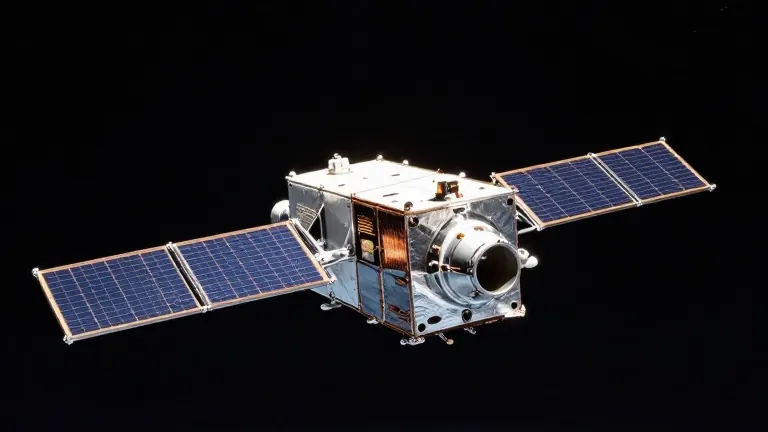
Argo Space conducted its first demonstration mission in July aboard a Falcon 9 rideshare. The startup is led by three brothers, Robert, Ryan, and Kirby Carlisle, who previously worked at SpaceX during the development of the Falcon 9. The Carlisles founded Argo Space in late 2022 to build infrastructure in space. They chose water as their primary propellant because it is available throughout the solar system and potentially harvestable on the Moon.
Robert Carlisle stated that the company is based on water. The element serves multiple functions beyond propulsion. It acts as a coolant for thrusters and avionics, and it provides radiation shielding. This design increases the propellant mass fraction of the spacecraft. A higher mass fraction allows the vehicle to travel farther and perform more tasks.
The company aims to create a transportation network connecting low-Earth orbit, geostationary orbit, and the Moon. This network would support logistics services such as satellite resupply, refueling, repair, and redeployment. Carlisle said that water-based transportation creates a commercial incentive to harvest water from the Moon's shallow gravity well.
The Navigator mission encountered technical issues during its initial flight. Controllers successfully made contact with the spacecraft. However, one of the two rollout solar arrays failed to deploy. Engineers spent approximately half a day troubleshooting the problem and collecting data on the vehicle's health. The spacecraft remained power-negative, meaning it was draining its battery faster than it could recharge.
The energy deficit prevented the team from testing the propulsion system. The mission was a demonstration flight designed to validate the company's core technologies. The Carlisles left SpaceX to focus on spacecraft rather than rocket development. Their goal is to reduce reliance on propellants launched from Earth.
The failure of the solar array is a setback for the early validation of the water-based system. The team continues to analyze the data collected during the incident. The company's long-term vision depends on the successful operation of these water-cooled and water-propelled spacecraft in orbit.
Source: Ars Technica