Kinney and Austin Run Against the Odds in Safe Districts
Two challengers in opposite corners of the political map describe the cost of competing in districts where the party in power has won for decades.
By Imani Donovan ·
Eighty percent of congressional districts are rated as solidly Republican or solidly Democrat, leaving a small minority of races that could actually shift control of the House. For candidates running against the grain in these safe seats, the campaign is defined by limited resources, few donors, and a skeleton staff.
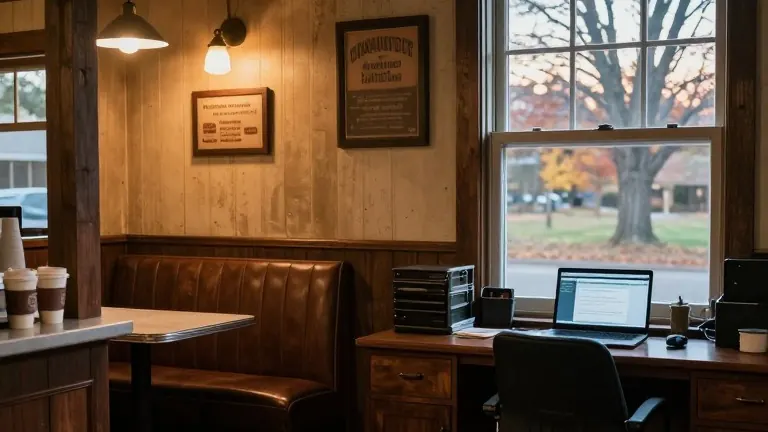
Lisa Kinney, a former Wyoming state senator, is running as a Democrat in the state’s sole House district. Wyoming has sent only Republicans to Congress since the late 1970s. Kinney campaigns in small venues like diners in Casper, where she explains her moderate stance to voters who often associate Democrats with national progressives. She says she wants to offer a different perspective to locals who feel they do not hear both sides.
Her opponent has aired advertisements placing her alongside Vermont Senator Bernie Sanders and New York City Mayor Zohran Mamdani. Kinney finds the comparison amusing but notes that many voters in Wyoming are skeptical of any Democrat who does not explicitly back Immigration and Customs Enforcement. She spends countless hours on the road because her campaign lacks a dedicated office and relies on a small group of volunteers.
George Austin, a home builder and former football coach in Connecticut, faces the mirror image of Kinney’s challenge. He is running as a Republican in Connecticut’s second congressional district, a seat held by Democrat Rep. Joe Courtney for 20 years. The state has seen 45 consecutive Democratic wins in U.S. House elections since 2008.
Austin has invested a quarter of a million dollars of his own money into the race. He wears multiple hats in the campaign, handling scheduling and volunteer coordination. He notes that voters often disengage when they learn he is a Republican, frequently asking if he supported President Trump before he can explain where they disagree.
Eric Ostermeier, founder of the nonpartisan site Smart Politics, points to deep partisan entrenchment as the driver of these safe seats. He notes that 19 state delegations currently consist entirely of members from the same political party, a record high for nearly three quarters of a century. Ostermeier explains that while gerrymandering plays a role, voters often sort themselves geographically, making it hard for state candidates to separate their identity from the national party brand.
In Connecticut, 46 of the 187 state legislature seats are uncontested. Austin argues that running a competitive race is necessary to restore balance and show that regular citizens can succeed. Kinney’s husband, Rodney Lang, says that even if they lose, the Democratic Party in Wyoming becomes stronger. Both candidates describe the work as exhausting but necessary, noting that they must convince voters they can win despite the overwhelming historical data.
Source: KPBS