US Navy incurs billions in monthly costs to enforce Hormuz blockade
Nightly interception missions over the Strait of Hormuz are straining aircraft maintenance and crew readiness while protecting key oil shipping lanes.
By Imani Donovan ·
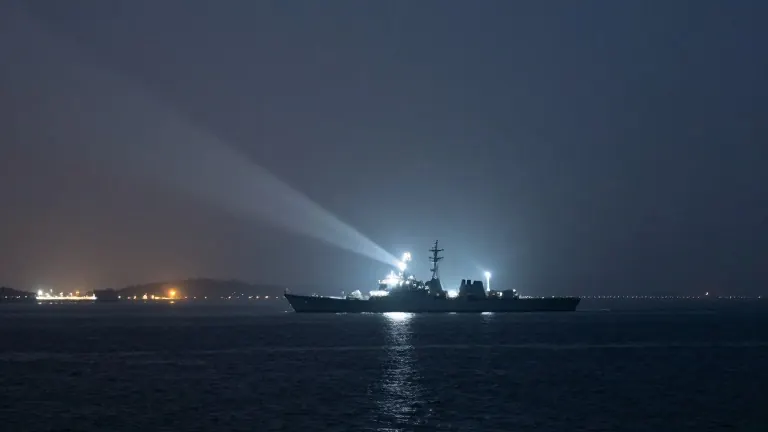
American forces are spending between $2 billion and $3 billion every month to maintain a naval blockade of Iranian ports in the Strait of Hormuz. This ongoing operation requires 50,000 troops and 20 ships deployed across the Middle East to protect commercial shipping and prevent Iranian oil exports.
The daily routine involves constant aerial defense over a narrow waterway. Service members report that the airspace is only about 20 miles wide but heavily populated with flying objects. This limited space gives fighter pilots very little time to react to missiles or drones launched from the Iranian coast.
Rear Adm. Jeffrey Heames, who commands the USS George Washington Carrier Strike Group, said US forces reliably intercept these threats. He noted that aircraft quickly engage anti-ship cruise missiles and drones to keep commercial vessels safe. The USS George Washington has been deployed in the region since August.
US Central Command states that this protection has allowed Gulf partners to export more than 1.5 billion barrels of crude oil since the summer. Adm. Brad Cooper added that more than 3,000 commercial vessels have transited the strait without incident over the past six months. Cooper confirmed that Iran has not exported any oil since the blockade began.
The high frequency of flights is causing physical wear on equipment and personnel. Ensign Addie Schaefer, an officer in the carrier's maintenance department, explained that increased flight hours lead to more damage and frequent repairs. Adm. Daryl Caudle, chief of naval operations, said the Navy is setting up a maintenance hub on Diego Garcia in the Indian Ocean to address this strain.
Caudle also mentioned plans for more port calls after the USS Abraham Lincoln completed a record deployment of 286 days at sea. While military leaders say forces can sustain the blockade for as long as needed, some officials worry that the heavy resource use could limit the US ability to respond to other future crises.
Source: The Jerusalem Post