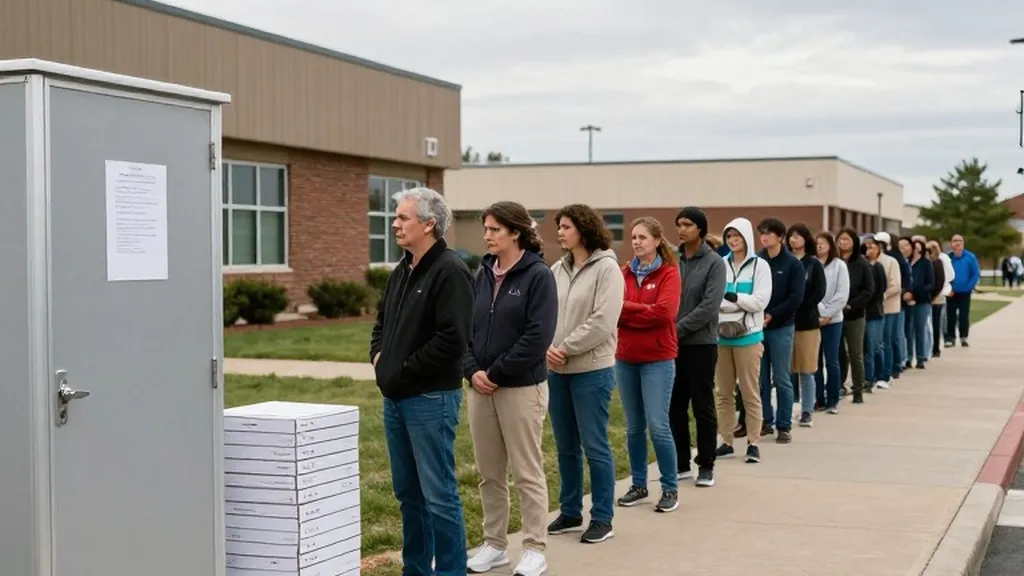
Markets watch AI costs, debt ceiling, and trade as polls open
Investors are closely monitoring the 2026 midterm outcomes for signals on artificial intelligence spending, federal debt negotiations, and international trade relationships.
By Imani Donovan ·

Election Day is here for the 2026 midterms, with polls open across the country as voters cast ballots to determine which party controls Congress for the final two years of President Donald Trump's second term. According to Reuters, Wall Street is watching these elections for more than just the balance of power in Washington. The financial community is particularly focused on how the results will impact investor concerns regarding artificial intelligence spending and debt ceiling negotiations. These economic factors are viewed as critical to market stability and long-term growth.
The Associated Press describes the election as a referendum on the president's second term, noting that voters are struggling with high prices and anger over an unpopular war with Iran. AP-NORC polling indicates that 35% of U.S. adults approve of Trump's job performance, while only 25% approve of his handling of the economy. About seven in ten adults say the country is heading in the wrong direction, with most blaming the president for rising costs. This backdrop of economic anxiety is a key driver for market sentiment as the day's votes are tallied.
More than 57 million people had already voted as of Monday, surpassing the early vote of four years ago in many closely watched states, according to the Associated Press. This high early turnout suggests a robust participation rate that could influence the final margins in battleground districts. Republicans were bracing for the possibility of losing the House while fighting to hold the Senate. The AP notes that one or two seats could tip either chamber, a scenario that carries significant implications for fiscal policy and trade legislation.
Trade and international alliances are also on the radar for global markets. The Associated Press mentions that economic strain and tariffs have made states like Maine competitive in the Senate race. These trade-related issues are central to the campaign debates in several key states. Investors are looking for clarity on whether the new congressional majority will support or challenge the current administration's trade policies, which have affected supply chains and global economic partnerships.
The debt ceiling remains a focal point for financial observers. Reuters highlights that results could add to investor concerns about debt ceiling negotiations. A divided government or a unified opposition could lead to more contentious negotiations over federal borrowing limits. The outcome of the House and Senate races will determine the leverage each party holds in these discussions, directly impacting bond markets and interest rate expectations.
Artificial intelligence spending is another major area of interest. The AP analysis of AdImpact data shows that 88.1% of Republican general election TV ad spending went to states and districts Trump won in 2024. This heavy spending reflects the high cost of the 2026 elections, which are likely to be the most expensive in history. The level of political spending itself is a signal to markets about the intensity of the upcoming legislative battles over technology regulation and infrastructure investment.
Voters in Palm Beach Gardens, Florida, and Raleigh, North Carolina, are expressing their views on the economic impact of the administration. Mark Barker, a voter in Florida, stated that he has been following Trump and thinks he is doing an awesome job. In contrast, James Moore, a librarian in North Carolina, noted that he is paying more for taxes, healthcare, and everything else. These individual perspectives reflect the broader national debate on the cost of living that is driving voter behavior on Election Day.
The race for the Senate includes 35 seats, with Republicans holding 53 and Democrats holding 45, plus two independents who caucus with Democrats, according to Ballotpedia. Democrats need a net gain of four seats for a majority, while Republicans can lose only two. The outcome in states like Georgia, Michigan, and Pennsylvania will be crucial in determining whether the Senate remains under Republican control or shifts to the opposition. This shift would have immediate effects on the confirmation of judges and the passage of economic legislation.
The House race involves all 435 seats, with Republicans holding 218 and Democrats 214, according to Ballotpedia. Democrats need a net gain of three districts to secure a majority. The AP notes that 21 Democratic-held districts voted for Trump in 2024, while nine Republican-held districts voted for Kamala Harris. These crossover districts are critical battlegrounds that could determine the final control of the House and, by extension, the direction of fiscal policy.
Governors' races are also being closely watched, with 36 governorships up for election. Republicans hold 26 governorships and Democrats 24, according to Ballotpedia. Democrats would need a net gain of two governorships to achieve a nationwide majority, which Republicans have held since 2010. The outcome in these races will influence state-level policies that can affect local economies and business regulations, adding another layer of complexity for investors assessing the political landscape.
As polls close and early results begin to trickle in, markets will react to the initial signals from key states. The combination of AI spending trends, debt ceiling prospects, and trade policy directions will shape the immediate financial response. The 2026 midterms are not just a political event but a significant economic indicator that will guide investment strategies in the coming months. The day's outcome will set the stage for the final two years of the current presidential term and the beginning of the next political cycle.