Michigan Senate Race: Democrats Rally After Stevens Endorses GOP Rival
Rep. Haley Stevens' defection to Mike Rogers forced a rapid voter drive for Abdul El-Sayed ahead of Tuesday's election.
By Imani Donovan ·
Former Rep. Haley Stevens endorsed Republican Senate candidate Mike Rogers on Sunday, a move that shocked Michigan Democrats and triggered an immediate effort to mobilize undecided voters before Tuesday's midterm election. Stevens, who lost the Democratic primary to Abdul El-Sayed in August, appeared with Rogers at a church in Detroit and announced her support shortly after. The endorsement prompted the state Democratic Party to expel her from the party.
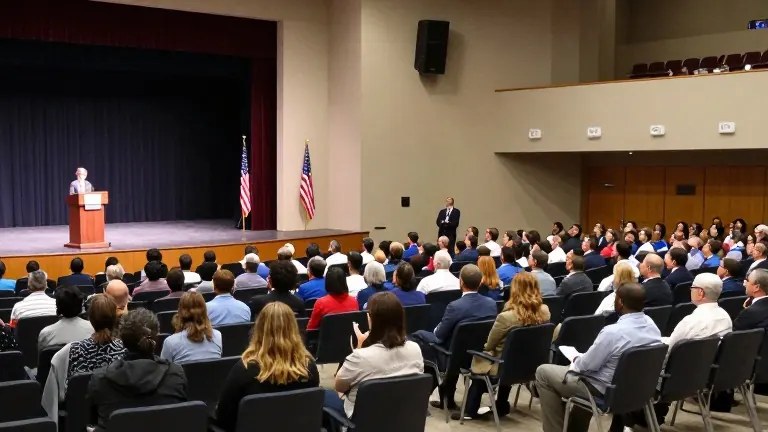
El-Sayed addressed the political turbulence Monday morning at Eastern Michigan University in Ypsilanti. He avoided detailed discussion of the controversy, focusing instead on the need for voter participation. When asked how to reassure supporters concerned about the impact of Stevens' switch, El-Sayed urged them to cast their ballots. He stated that controlling the outcome relied solely on voter turnout. Sen. Elizabeth Warren and El-Sayed's grandparents joined him at the rally.
Over 2.3 million Michigan residents had already cast ballots as of Monday. In the 2022 midterms, nearly 4.5 million people voted in the state. The regular early in-person voting period concluded on Sunday, with polls set to reopen statewide for Election Day. Lori Goldman, a Democratic organizer in Oakland County, noted that while roughly half the electorate has voted, the recent drama could heavily influence the remaining voters.
The endorsement was a strategic victory for the Rogers campaign. Rogers contacted Stevens personally over the weekend to arrange the appearance. His staff learned of the joint church visit only on the morning of Sunday, according to a person with direct knowledge of the discussions. The campaign began promoting the endorsement to voters on Monday.
Democratic leaders rebuked Stevens, arguing her move would energize their base rather than demoralize it. El-Sayed raised $2.4 million on Sunday, marking his largest fundraising day of the campaign. The state party reported a surge in volunteer signups. Curtis Hertel, chair of the Michigan Democratic Party, said the development would galvanize Democrats without changing the election's fundamental dynamics.
The split exposed lingering tensions within the party over El-Sayed's campaign conduct. Stevens had narrowly lost the primary by approximately 14,000 votes. Following her loss, she pledged support for El-Sayed but remained absent from the campaign trail for months. Disagreements centered on El-Sayed's stance regarding Israel and the war in Gaza. Rep. Debbie Dingell, a senior Democratic figure, said she uninvited Stevens from a planned unity event because the disputes had become distracting.
Stevens cited personal friction in a CNN interview, stating she was being honest with the public. Dingell described watching the interview as painful and said she had worried about Stevens throughout the week. Adrian Hemond, a Democratic strategist, characterized the endorsement as driven by personal animosity rather than policy differences, noting that Stevens would have made the move earlier if substance had been the primary factor.
Source: Inland Valley Daily Bulletin