Senate Control Hinges on 13 Toss-Up Races as Midterms Loosen Up
With 35 seats at stake, both parties face narrow margins for victory, making the 13 battleground states the critical deciding factor for congressional control.
By Emma Mehta ·
The United States is in the midst of a pivotal midterm election that will determine which party controls Congress for the final two years of President Donald Trump's second term. According to Ballotpedia, 35 of the 100 seats in the U.S. Senate are up for grabs on Tuesday, November 3, 2026. This cycle includes 33 regular elections and two special elections to fill the remainder of the terms for Marco Rubio in Florida and JD Vance in Ohio. The current balance of power sees Republicans holding 53 seats and Democrats holding 45, with two independents who caucus with the Democratic party. Because of this distribution, Democrats require a net gain of four seats to secure a majority, while Republicans can afford to lose only two seats to maintain their advantage.
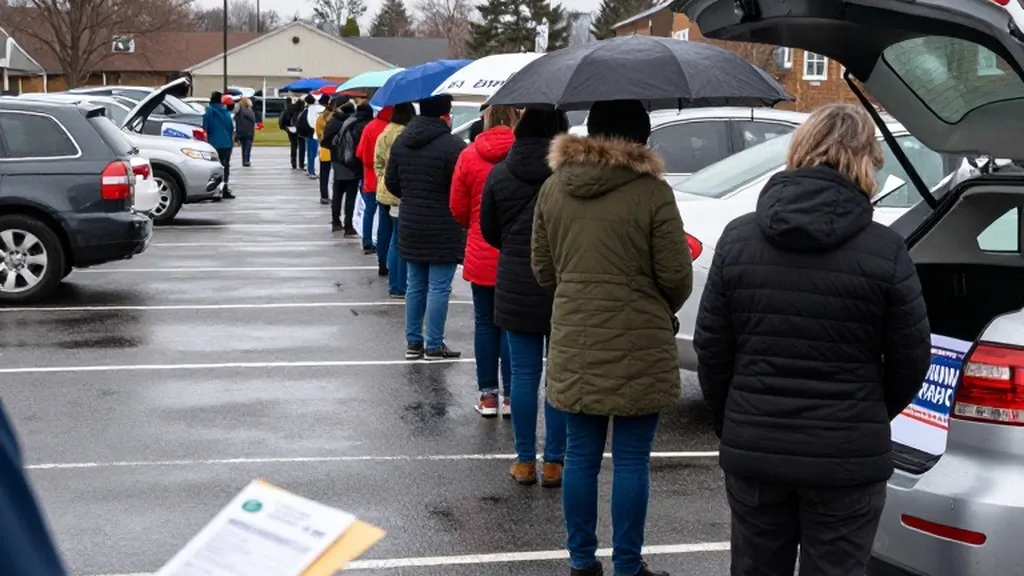
Eleven senators, including four Democrats and seven Republicans, are not seeking re-election, which has opened several key races. The Associated Press notes that the outcome of these contests is being viewed as a referendum on the president's second term. Voters are reportedly struggling with high prices and expressing anger over an unpopular war with Iran. Polling data from AP-NORC indicates that 35 percent of U.S. adults approve of Trump's job performance, while about seven in ten believe the country is heading in the wrong direction. This sentiment is driving high engagement, with more than 57 million people having already voted as of Monday, surpassing early vote totals from four years ago in many closely watched states.
Ballotpedia has identified 13 Senate races as battlegrounds where the outcome remains uncertain. These races span a variety of political landscapes, from states that voted heavily for Trump in 2024 to those that leaned toward Kamala Harris. In Alaska, incumbent Republican Dan Sullivan faces a competitive challenge in a state where Trump won by 13.1 points in 2024. In Florida, Republican Ashley Moody is running in a special election for Rubio's seat, also in a state that Trump carried by 13.1 points. The Trump administration has filed a lawsuit related to the certification of the Senate result in Alaska, adding a layer of legal complexity to the race.
Several other races are considered critical to the overall balance of power. In Georgia, Democratic incumbent Jon Ossoff is defending his seat in a state that Trump won by 2.2 points. The Associated Press highlights the matchup between Ossoff and Republican Representative Mike Collins as a key contest. In Michigan, the seat is open following the retirement of Gary Peters, and the race is between Republican former Representative Mike Rogers and Democrat Abdul El-Sayed. This state voted for Trump by a slim 1.4 points in 2024, making it a true toss-up according to ratings from Cook, Decision Desk, Inside Elections, and Sabato.
Maine represents another crucial battleground where the race is rated as a toss-up by all four major pollsters. Republican incumbent Susan Collins is facing Democratic former state Senate President Troy Jackson. The Associated Press notes that economic strain and tariffs have made the state more competitive than in previous cycles. Maine voted for Harris by 6.9 points in 2024, providing a favorable environment for the Democratic challenger. In New Hampshire, Democratic Representative Chris Pappas is competing against former Republican Senator John E. Sununu for the seat vacated by retiring Democrat Jeanne Shaheen. The state voted for Harris by 2.8 points in 2024, keeping the race tightly contested.
Other notable races include Kansas, where the seat is open after the retirement of Joni Ernst. Kansas is described as a reliably Republican state that has become central to the fight for Senate control, with Trump winning by 16.2 points in 2024. In Ohio, Republican incumbent Jon Husted is running in a special election for JD Vance's seat, facing Democratic former Senator Sherrod Brown. The state voted for Trump by 11.2 points. In Texas, Republican Attorney General Ken Paxton is challenging Democrat James Talarico for the seat associated with John Cornyn, a state that Trump won by 13.6 points. Trump backed Paxton over Cornyn in the primary, signaling strong support for the challenger.
North Carolina offers another critical test, with Democratic former Governor Roy Cooper facing former Republican National Committee chair Michael Whatley. Senator Thom Tillis retired after clashing with Trump, leaving the seat open in a state that Trump won by 3.3 points. Iowa is also a key race, with the seat open due to the retirement of Joni Ernst. The state voted for Trump by 13.2 points in 2024, but the race is rated as a toss-up or tilt Republican by various analysts. Montana is another open seat following the retirement of Steve Daines, in a state that Trump won by a wide 19.9 point margin. Nebraska is up for election with incumbent Republican Pete Ricketts, in a state that Trump won by 20.3 points.
The Associated Press describes the election as a moment where voters are weighing economic costs against political loyalties. Republican National Committee Chairman Joe Gruters stated that everything depends on turnout, asserting that if their voters turn out, they will win. In contrast, Democratic Congressional Campaign Committee Chair Representative Suzan DelBene noted that the American people are angry and want change. Voter sentiment is divided, with some, like Mark Barker of Palm Beach Gardens, Florida, praising Trump's performance, while others, like James Moore of Raleigh, North Carolina, cite higher taxes and healthcare costs as reasons for their vote.
Financially, the 2026 elections are likely to be the most expensive in history. Republican committees have outraised and outspent Democratic committees at the committee level, aided by Trump-affiliated groups and Elon Musk. However, at the candidate level, Democrats have outraised their opponents. According to AP analysis of AdImpact data, 88.1 percent of Republican general election TV ad spending went to states and districts that Trump won in 2024. This heavy spending in safe Republican territory contrasts with the strategic focus on the 13 battleground Senate races where the outcome of the entire chamber may be decided.